
Reinforced Bitumen Roofing: Different Systems and What You Need to Know
- by Dina Vaisman
- November 20, 2026
- Roofing Articles

Bitumen roofing has been used on flat roofs for many years and is still a popular choice across the UK. There are different types of membranes available, from traditional multi-layer systems to newer single-layer products designed for roof refurbishment.
For roofing merchants and contractors, it’s useful to understand how these systems differ and which products are suitable for different jobs.
In this article we’ll cover:
- What reinforced bitumen roofing is
- How multi-layer systems work
- What single-layer bitumen membranes are
- The benefits of overlay membranes
- What to consider when choosing a roofing product
Whether it’s a new roof or an existing one that needs some attention, choosing the right materials is important. Here’s a closer look at the options available.
What is Reinforced Bitumen Roofing?
Reinforced bitumen roofing uses membranes made from bitumen, with added materials such as polyester or glass fibre to make them stronger.
These membranes are commonly used on flat roofs across commercial, industrial and residential buildings. Their main job is to keep water out and protect the roof from the weather.
There are different types available, depending on the roof and the requirements of the project.
How Does It Work?
The membrane creates a waterproof layer across the roof. Some systems use more than one layer to provide the finished covering.
A traditional bitumen roof will usually have an underlay and a capsheet. The underlay is fitted first, with the capsheet going on top to provide the finished surface.
Other materials, such as insulation and vapour control layers, may also be needed depending on the roof design.
Why is Reinforced Bitumen Used?
Reinforced bitumen membranes have remained popular in the roofing industry for a number of reasons:
- Strength: The reinforcement helps the membrane cope with movement and general wear.
- Waterproofing: Provides protection against rain and water ingress.
- Choice: Different membranes and finishes are available for different projects.
- Versatility: Suitable for a range of flat roofing applications.
- Refurbishment: Can be used on existing roofs, depending on their condition.
Traditional Multi-Layer Bitumen Roofing
Multi-layer bitumen roofing has been used for years and is still a common choice for flat roofs.
As the name suggests, it uses more than one layer of membrane, usually an underlay and a capsheet.
How is it Installed?
The underlay is normally fitted first, followed by the capsheet. Both layers need to be installed correctly to make sure the roof is properly protected.
Torch-on membranes are commonly used. A gas torch heats the underside of the membrane so it bonds to the surface underneath.
There are also self-adhesive and flame-free options available, which can be useful on sites where using a gas torch isn’t suitable.
These systems are used on all sorts of projects, from commercial buildings and warehouses to smaller residential roofs. The exact build-up will depend on the roof design and project requirements.
What is a Single-Layer Bitumen Membrane?
Not every flat roof needs a traditional multi-layer system. Single-layer bitumen membranes offer another option, with one main membrane layer providing the waterproofing.
Some products are designed specifically for overlaying existing roof coverings, while others can be used as a single-layer capsheet in certain warm roof systems.
What Are the Benefits?
Single-layer membranes can be useful for several reasons:
- Less installation work: Using one membrane layer can make the job more straightforward.
- Refurbishment: Some products can be fitted over suitable existing roof coverings.
- Less disruption: An overlay can avoid the need to remove the entire existing roof covering where conditions allow.
It’s important to check that the membrane is suitable for the job. Not every product can be used on every type of roof.
Using Overlay Membranes on Existing Roofs
Over time, flat roofs can start to show signs of wear. Exposure to rain, wind and changing temperatures can all affect the condition of the roof covering.
When this happens, a complete replacement isn’t always the only option. If the existing roof is still in a suitable condition, an overlay membrane may be worth considering.
This involves fitting a new waterproof membrane over the existing roof covering rather than stripping everything back.
What Needs to Be Checked First?
Before installing an overlay, the existing roof needs to be checked properly.
A few things to look at include:
- Roof condition: Is the existing covering suitable for an overlay?
- Moisture: Is there any trapped water or damp within the roof?
- Structure: Is the roof deck and supporting structure sound?
- Surface preparation: Is the existing surface suitable for the new membrane?
- Roof details: Have edges, outlets and upstands been considered?
It’s important to get these checks right. Covering an existing problem won’t make it go away, so any issues need to be dealt with before work begins.
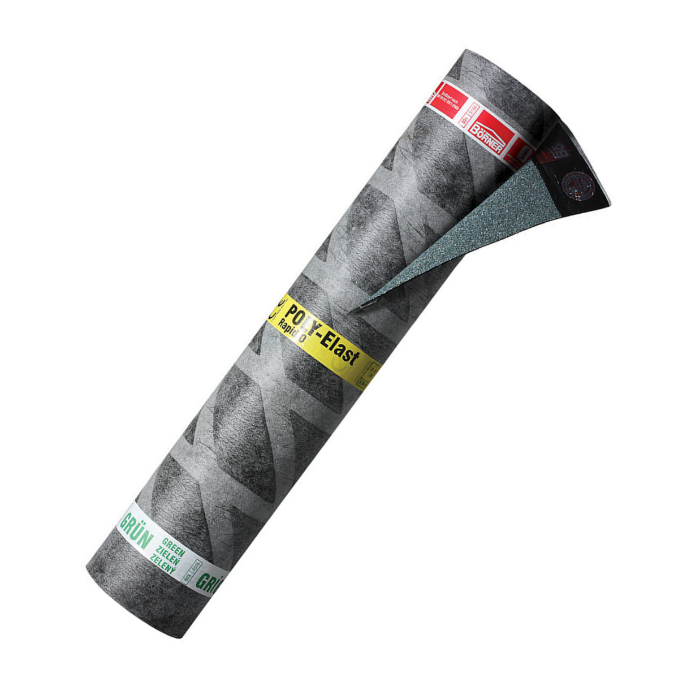
POLY ELAST RAPID-O by Wonderbuilds
At Wonderbuilds, we supply POLY ELAST RAPID-O, our single-layer universal bituminous membrane for new build and refurbishment projects.
It’s designed for overlaying existing roof coverings and can also be used as a single-layer capsheet in warm roof specifications.
The membrane includes Graphite Firewall Technology and offers flexibility at temperatures down to -25°C.
It’s available with a 20-year guarantee, subject to the relevant product and system requirements.
For contractors looking for a single-layer bitumen membrane, POLY ELAST RAPID-O is an option worth considering for a range of flat roofing jobs.
Choosing the Right Bitumen Roofing System
With so many products available, choosing the right one will depend on the job. Before making a decision, there are a few things worth thinking about.
Check the Existing Roof
If it’s a refurbishment, start by looking at the condition of the existing roof. It may be suitable for an overlay, or it may need to be stripped back and replaced.
Read the Product Information
Always check the manufacturer’s guidance before choosing a membrane. Make sure it’s suitable for the roof, understand how it needs to be installed and check any guarantee requirements.
Quick summary:
- Reinforced bitumen membranes use materials such as polyester or glass fibre to improve strength.
- Traditional systems usually have an underlay and a separate capsheet.
- Single-layer membranes offer another option for flat roofing projects.
- Overlay membranes can be fitted over suitable existing roof coverings.
- The existing roof should always be checked before an overlay is installed.
- POLY ELAST RAPID-O is a WonderBuilds single-layer bituminous membrane designed for overlay and other flat roofing applications.
FAQs
1. What is reinforced bitumen roofing?
It’s a type of flat roofing that uses bitumen membranes with added reinforcement, usually polyester or glass fibre, to improve strength.
2. What is the difference between single-layer and multi-layer roofing?
A multi-layer system normally uses an underlay and a separate capsheet. A single-layer membrane provides the waterproofing in one main layer.
3. Can you put a new membrane over an existing flat roof?
Yes, in some cases. The existing roof needs to be checked first to make sure it’s suitable for an overlay.
4. What is POLY ELAST RAPID-O?
It’s a single-layer universal bituminous membrane supplied by Wonderbuilds. It’s designed for overlaying existing roof coverings and can also be used as a single-layer capsheet in warm roof specifications.
5. Is POLY ELAST RAPID-O suitable for refurbishment projects?
Yes. It’s designed for refurbishment work, including overlaying suitable existing roof coverings, as well as new build applications.
6. How long does a bitumen flat roof last?
This depends on the product, installation and how well the roof is maintained. Check the manufacturer’s information for expected service life and guarantee details.
7. What should contractors check before choosing a bitumen membrane?
The existing roof condition, surface, installation method and product specification are all important. Always check the manufacturer’s guidance before starting work.
Get in touch today
Let’s get started! Fill out the quick form below to let us know how we can help you with your current and future roofing and insulation needs.

