
Understanding Breather Membranes in Pitched Roofing
- by Dina Vaisman
- October 5, 2026
- Roofing Articles

There are quite a few different materials that go into a pitched roof, and the membrane underneath the tiles or slates is one of them. If you are involved in roofing, you will probably have come across both breathable and non-breathable membranes.
Breather membranes have become a popular choice for pitched roofing because they do two jobs at the same time. They help protect the roof from water getting in, but they also allow water vapour to pass through.
It is really the way they deal with moisture that makes them different from some other roofing membranes.
A breather membrane is fitted underneath the roof covering, such as tiles or slates. If water gets underneath the roof covering, the membrane provides an additional layer of protection. At the same time, moisture vapour from inside the building can pass through the membrane and escape.
This is useful because you do not want moisture sitting within the roof structure. Condensation can occur for a number of reasons, and managing moisture is an important part of the overall roof design.
Breathable and non-breathable membranes
The names give you a good idea of the main difference.
A breathable membrane allows water vapour to pass through. It is still waterproof, so it can help protect the roof from rain and other water coming in from above.
A non-breathable membrane does not allow water vapour to pass through in the same way. These membranes are still used on pitched roofs and can be suitable for certain types of roof construction, particularly where there is appropriate ventilation.
This means there is not necessarily one membrane that is right for every job. The roof construction, insulation, ventilation and other materials being used all need to be taken into account.
There is another product that is sometimes confused with a breather membrane, and that is a vapour control layer (VCL). They are not interchangeable.
A VCL is normally installed on the warm side of the insulation and is there to control the movement of water vapour into the roof. A breather membrane is positioned towards the outside of the roof and allows vapour to escape.
Why are breather membranes used?
For roofing contractors, one of the main advantages is having a membrane that can provide protection from water without trapping moisture in the roof.
They are suitable for a wide range of pitched roof applications and can be used underneath common roof coverings such as tiles and slates.
Using a breather membrane can help reduce the amount of moisture held within the roof structure, which in turn can help with condensation. It also gives the roof another layer of protection should water get past the roof covering.
There is one thing worth keeping in mind, though. A breathable membrane does not mean that ventilation can simply be ignored. The roof still needs to be designed correctly, and the ventilation requirements will depend on the particular construction.
As with any roofing product, the manufacturer’s installation instructions should be followed.
What options are available from Wonderbuilds?
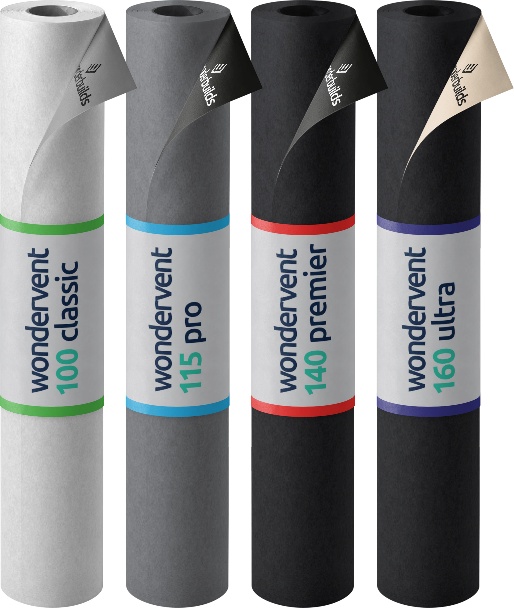
At Wonderbuilds, we supply breather membranes in a number of different options for pitched roofing.
Our range includes 100g, 115g, 140g and 160g membranes. They are available in 1 metre and 1.5 metre widths, with different roll lengths available.
For roofing merchants, having a selection of weights and sizes means there are options available for different types of pitched roofing work. Contractors can then choose the product that is suitable for the particular roof and specification.
Breather membranes are only one part of our roofing range. We also supply other products for pitched roofs, including dry ridge kits and bitumen shingles. For flat roofing, our range includes products such as capsheets and underlays.
So, are breather membranes worth using?
For many pitched roof systems, a breather membrane can be a useful part of the overall construction. It provides protection underneath the roof covering while allowing water vapour to escape, helping the roof deal with moisture more effectively.
The important thing is to make sure the membrane is suitable for the roof being constructed and that it is installed as part of a properly designed system.
If you are a roofing merchant or contractor and would like to know more about the Wonderbuilds breather membrane range, you can contact us at admin@wonderbuilds.co.uk.
Get in touch today
Let’s get started! Fill out the quick form below to let us know how we can help you with your current and future roofing and insulation needs.

